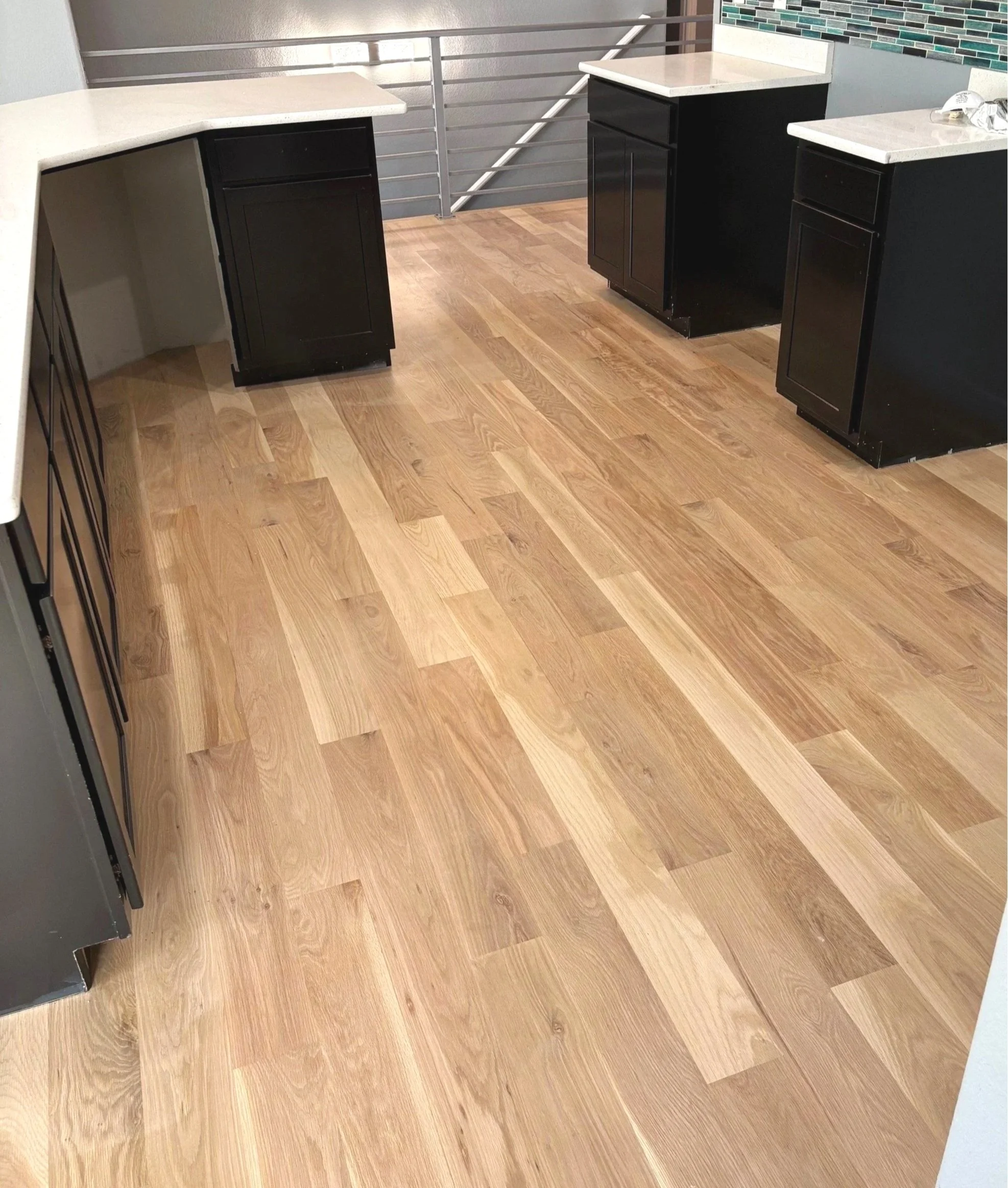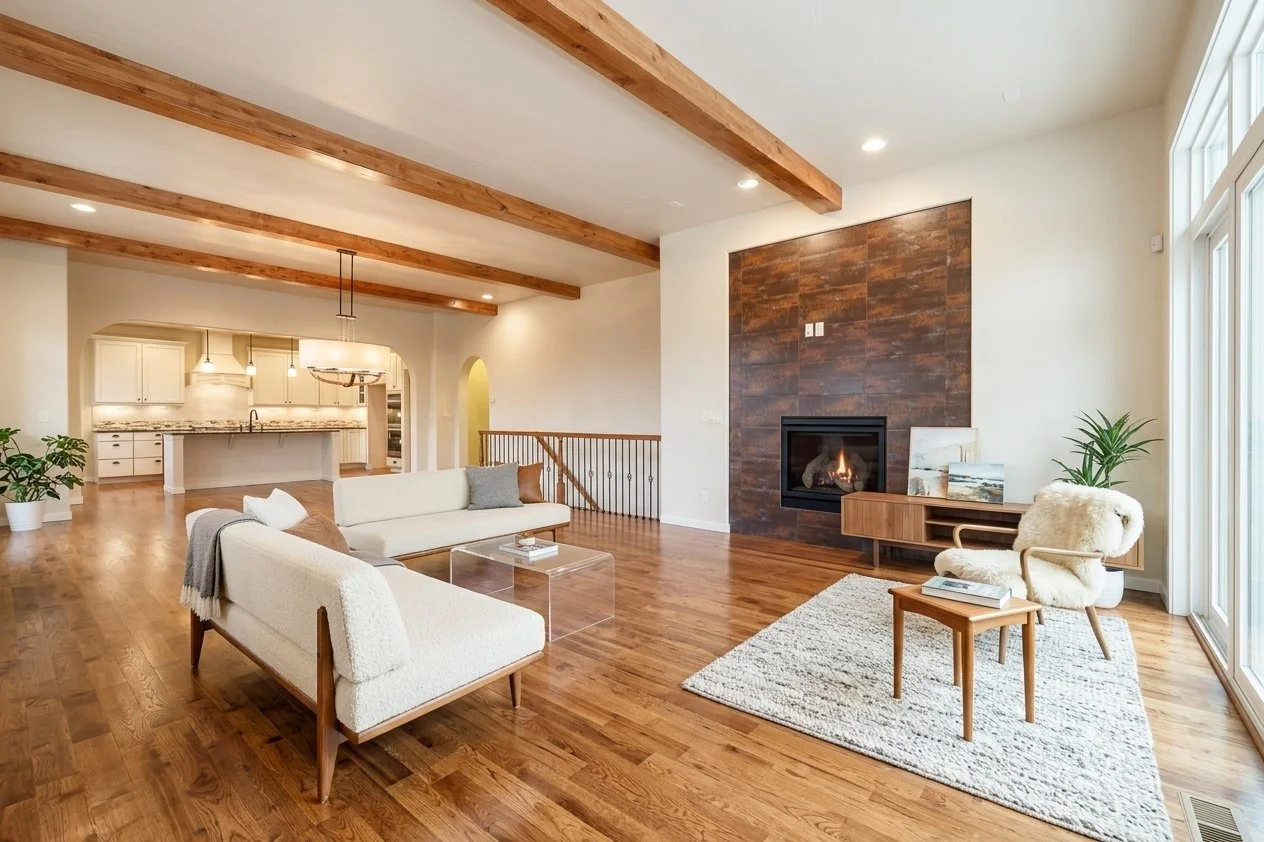
Understanding Hardwood Flooring Types
Nothing matches the natural elegance and lasting value of genuine hardwood. To pick a floor that looks incredible and stands up to daily life, consider a few key factors before making your choice.
Solid Hardwood vs Engineered Hardwood
Prefinished hardwood
Solid or engineered wood planks that are already sanded and sealed in a factory. Ready to be installed and immediately used.
Solid Wood Flooring
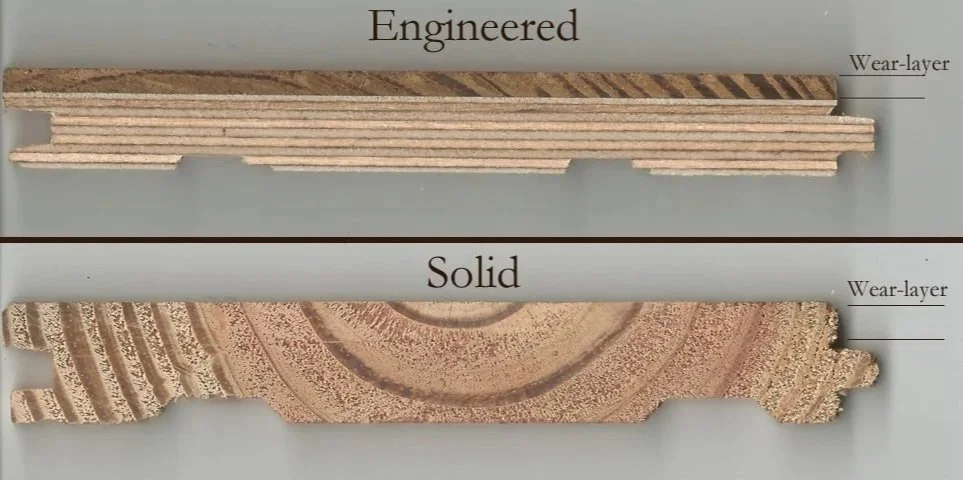
Crafted from a single seamless piece of timber, solid wood offers unmatched longevity for above-ground spaces. Its standout feature? You can sand and refinish it multiple times, letting you refresh your floors for generations to come.
Engineered Wood Flooring
Designed for superior stability, engineered wood pairs a genuine hardwood top layer with a multi-ply core that resists expanding and contracting. This makes it the ideal choice for moisture-prone areas like basements. While it can still be sanded and refinished, it offers fewer refinishing cycles over its lifetime compared to solid wood.
| Feature | Solid Wood | Engineered Wood |
|---|---|---|
| Material | Single 100% solid timber plank | Multi-layer core with real hardwood top veneer |
| Best For | Main floors, upstairs rooms (on/above ground) | Basements, lower-levels |
| Refinishing | Sand and refinish multiple times | Sand and refinish 1-2 times (wear-layer dependent) |
| Stability | Naturally expands/contracts with climate | High resistance to temperature and humidity shifts |
Comparison at a Glance
Popular Hardwood Species for Flooring
Red Oak
A timeless classic, Red Oak brings warm undertones and pronounced natural grain patterns that add character to any room. Renowned for its natural resilience, its prominent grain expertly hides everyday wear, pets, and foot traffic—making it a perfect blend of enduring beauty and practical durability.
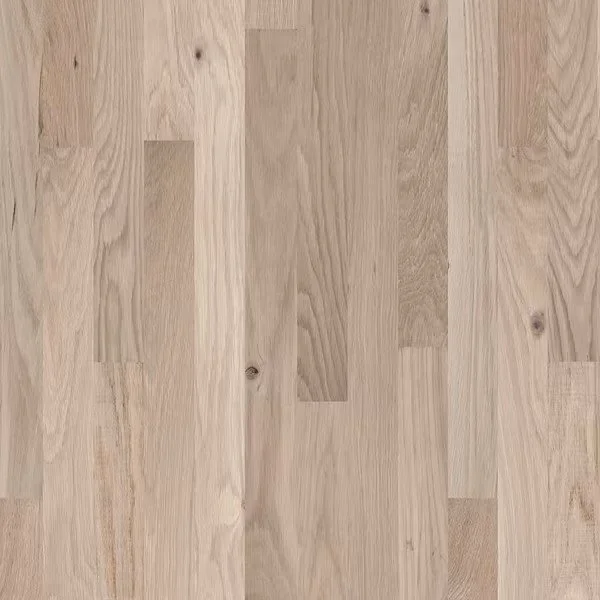
White Oak
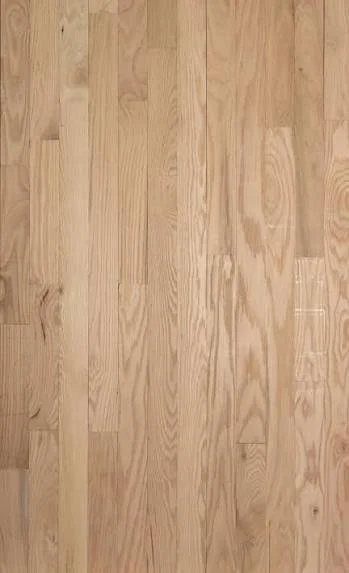
Sophisticated and highly versatile, White Oak features muted wheat-to-golden tones with a smooth, straight grain pattern. Its dense structure offers exceptional water resistance, while its neutral palette acts as a blank canvas—staining beautifully from soft modern scandi-whites to rich, dramatic dark tones.
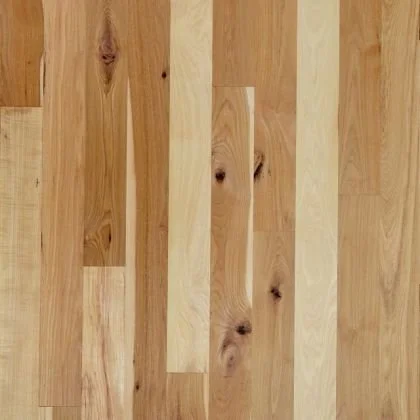
Hickory
Striking and exceptionally tough, Hickory is the ultimate choice for spaces that demand bold character and maximum durability. Celebrated for its dramatic color variation—ranging from rich cocoa browns to bright cream tones—its prominent grain pattern easily hides daily wear, making it as practical as it is eye-catching.
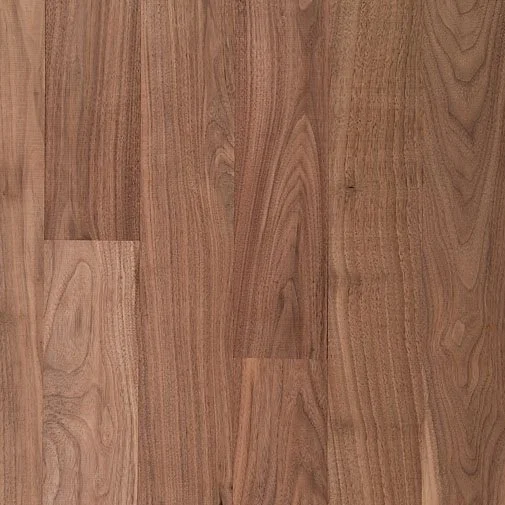
Walnut
Rich, luxurious, and unmistakable, Walnut brings deep chocolate tones and sophisticated sweeping grains to high-end interiors. Naturally dark from top to bottom, its softer warmth provides an inviting, high-fashion feel underfoot, making it a standout choice for formal living rooms, dining spaces, and executive suites.
Hardwood Flooring Grades Explained
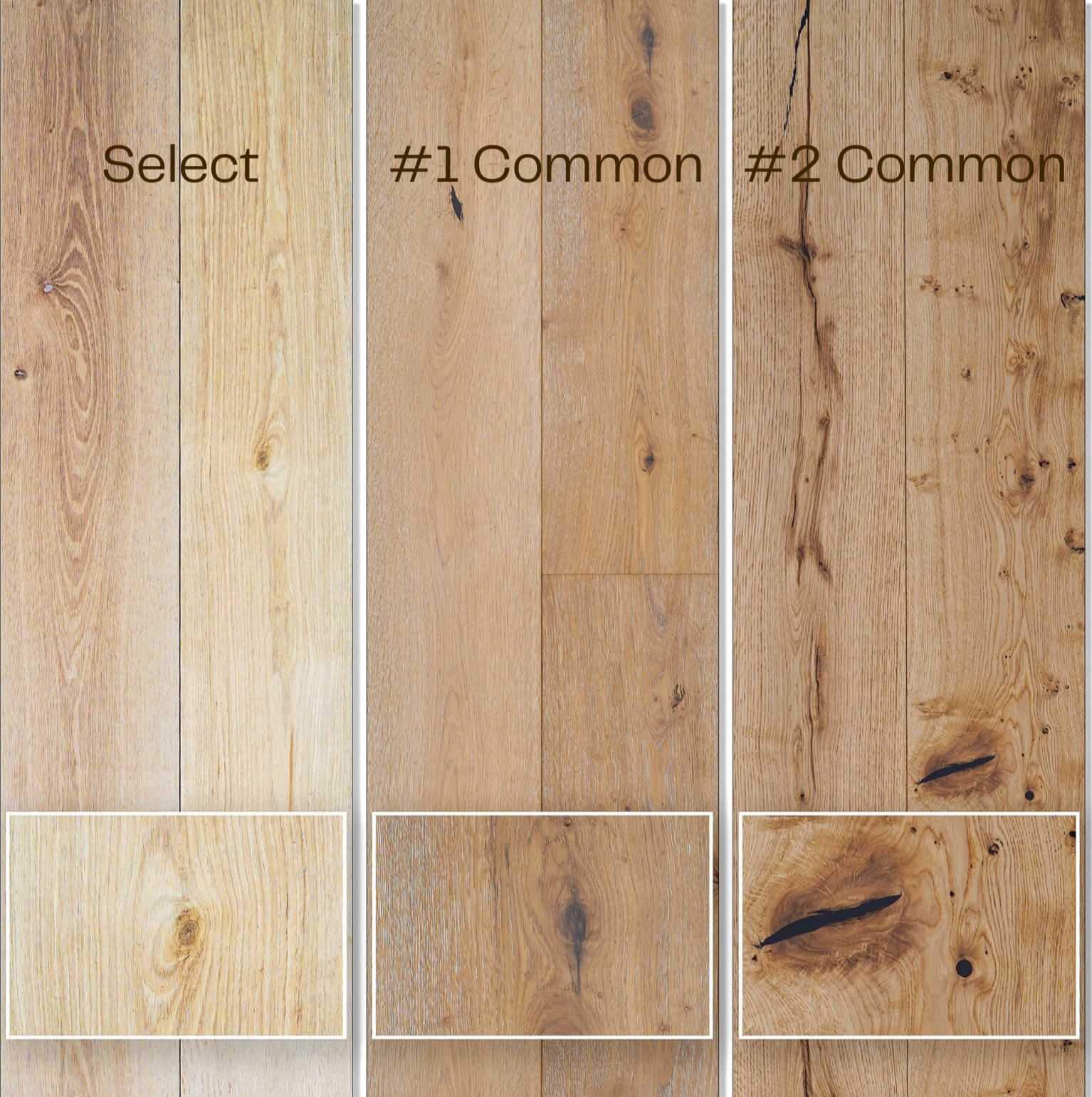
The Wood Flooring Grading system was created by NOFMA to describe the appearance of hardwood floors. This system is helpful when determining how you want a room to look and feel. Wood flooring grades consider the color, grain, and markings of a particular hardwood type.
-
Select grade flooring offers natural characteristics like slight color and grain variation and some small knots, worm holes, or mineral streaks. This flooring is available in slightly longer than average plank lengths. Select grade floors are chosen for a more natural look.
-
Flooring with this grade is characterized by obvious variations in color and character, including knots, worm holes, and the variations that come with machining and drying the wood. Common #1 flooring is typically available in shorter average plank lengths. It works best in homes, utility rooms, or anywhere where contrast is desired.
-
The Common #2 grade offers many natural and manufacturing variations including knots, worm holes, and prominent color and character variation. Machining and drying irregularities are also seen in flooring of this grade. This grade is the best choice for projects where consistency is not important and character and high contrast are key.
Ready to bring the warmth and beauty of real wood into your space? Whether you are exploring options, weighing species and finishes, or ready to jump straight into a project, we are here to help.
Fill out the form below to request more info or to schedule your free, no-obligation estimate.